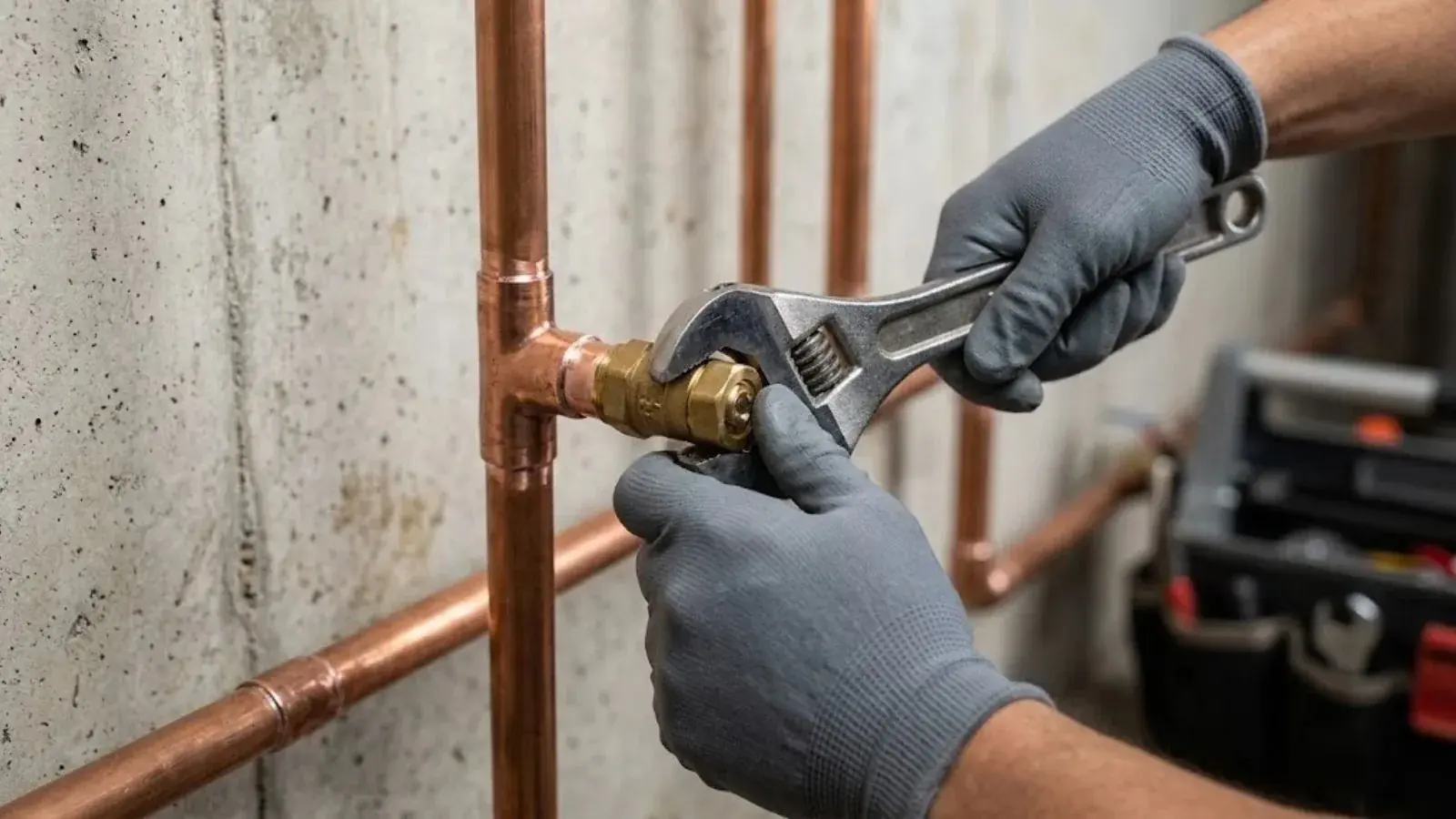
Plumbing installation covers new supply and drain lines, fixtures, appliance hookups and the connections that make a remodel or an addition work. Planned projects are scheduled around your contractor and the inspection calendar, and we price the scope in writing before we start.
If you are adding a water heater, see water heater installation. For failures that need repair instead of new work, our emergency pages cover the urgent side.
Bathroom Remodels and Additions
A bathroom remodel moves fixtures, changes valves and often upgrades the drain. A new bathroom needs supply lines, a drain with proper slope and venting that lets the system breathe. We coordinate with your contractor on rough-in timing so walls close only after inspection.
Bring plans or a sketch, and we mark where each line and vent goes. Changes made after the walls are closed cost more than changes made at rough-in.
Kitchen Plumbing
Kitchen work includes sinks, faucets, disposals, dishwashers, refrigerator water lines and pot fillers. Relocating a sink means moving the drain and vent too, and that depends on the floor structure and the distance to the main stack. We check before you buy cabinets.
If your disposal is part of the project, see garbage disposal repair for sizing and installation notes.
Planning a remodel?
Call to talk through scope, timing and a clear price.
Rough-In, Top-Out and Final
Most projects follow three stages. Rough-in sets pipes before walls close. Top-out ties in vents and fixtures through the roof or attic. Final installs fixtures, trims valves and tests everything. Each stage may require an inspection, and we coordinate the timing.
| Stage | What happens | What to have ready. |
|---|---|---|
| Rough-in | Pipes and drains set in open walls | Fixture list and locations. |
| Top-out | Vents and stacks connected | Access to attic or roof. |
| Final | Fixtures set, valves trimmed, systems tested | Fixtures on site and finished walls. |
Permits, Codes and Inspections
Georgia adopts state minimum construction codes, and local governments may add amendments. Inside Griffin, the Permits Division at 100 S. Hill St. handles trade permits, and licensed contractors pull the plumbing permit. In unincorporated Spalding County, Community Development handles permits.
Call the office for your address, and we confirm what the work requires. We do not skip permits on work that needs them.
Outdoor Lines and Utilities
Hose bibs, irrigation connections, gas line stubs and water lines to outbuildings fall under installation. Water lines to detached garages and workshops are trenched, sloped and protected. See water line repair for existing underground lines.
Fixtures We Install
Most projects involve a handful of fixtures. We install toilets, sinks, faucets, tubs, showers, disposals, dishwashers, ice maker lines, washing machine boxes and hose bibs. We also connect water treatment equipment such as filters and softeners when the layout allows, and we tie in gas lines for appliances such as tankless heaters and ranges when the work calls for it.
For each fixture, the plumber checks that supply lines, shutoffs and drains are in good shape and replaces tired parts. Reusing a corroded shutoff on a new faucet is a leak waiting to happen, so we replace it.
Working With Your Contractor and Inspector
On remodels, plumbing is one trade among several. We coordinate rough-in dates so walls are not closed before inspection, tell the contractor what blocking and clearances we need and confirm fixture locations on the plan. If an inspector asks for a change, we explain it and fix it.
Good coordination avoids the most expensive mistake in remodeling, which is opening a finished wall to move a pipe. Bring your plans or sketches to the first visit. See our Experiment page if your project is north of the city.
Planning for Water Heaters, Filters and Future Needs
A remodel is a chance to plan for what comes next. Adding a shutoff valve at each fixture makes future repairs easy. Running a line for a future filter or a pot filler while the wall is open costs far less than doing it later. Leaving access panels at traps and valves saves demolition.
Tell us what you might add in the next few years, and we plan the rough-in for it. Our tankless water heater page explains the gas and venting needs that are cheapest to handle during a remodel.
Codes, Permits and Inspections for New Work
New plumbing is inspected in stages, and each stage is measured against code. Georgia's state minimum plumbing standard is built on the International Plumbing Code (IPC), with Georgia amendments published by the Georgia Department of Community Affairs, and local governments can add their own rules.
For a permit question at a Griffin address, call the City of Griffin Permits Division at (770) 233-4130, and for unincorporated Spalding County call Community Development at (770) 467-4280.
What Installation Costs
Scope and fixtures set the price
We price the rough-in and the fixtures separately so you can see each part.
Remodel work is generally not an insured loss. Ask your insurer whether major renovations change your coverage.
Questions homeowners ask
Yes. We coordinate rough-in and final stages around your schedule.
Yes. We check that they fit before we start.
Yes, for homeowners and builders. Call with the plans.
Often yes. Call the City of Griffin Permits Division at (770) 233-4130 or Spalding County Community Development at (770) 467-4280.