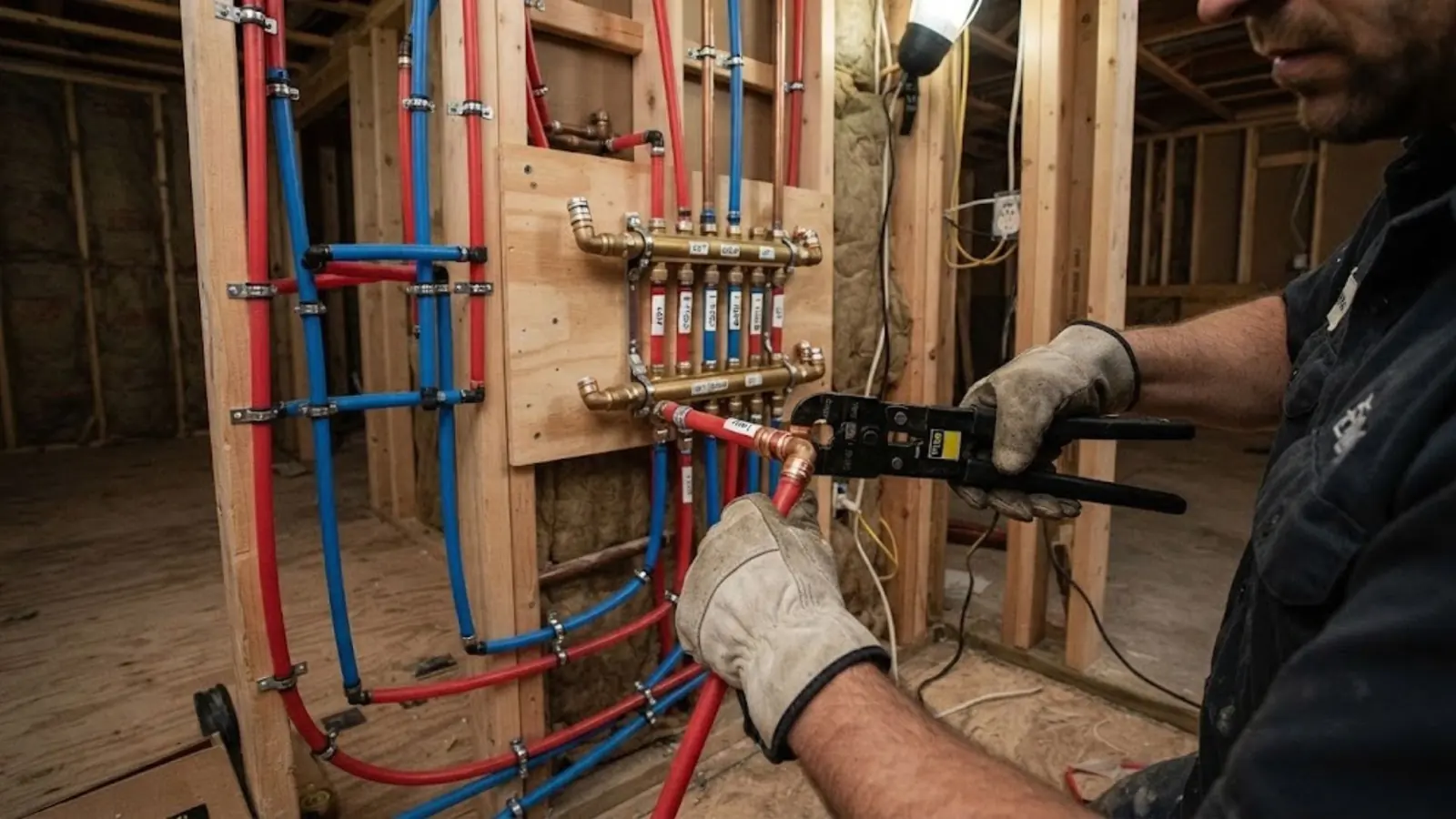
Repiping replaces the supply pipes that bring water to your fixtures. It is the long-term answer to repeated leaks, rusty water, low pressure and pipe materials that are known to fail with age. A burst or major leak is handled first, and if water is spraying now, see emergency burst pipe repair.
A repiping project is planned, not rushed. We inspect the system, explain what we found, give options and a clear price, and schedule the work to limit the time your water is off.
Signs Your Home May Need Repiping
One leak does not mean a repipe. A pattern does.
- Pinhole leaks that appear in different places over months or years.
- Brown or yellow water when you first turn on a tap.
- Low pressure at several fixtures that other repairs did not fix.
- Visible corrosion, green crust or flaking on exposed pipe.
- A house built in an era when polybutylene or galvanized pipe was common.
Mill-era and mid-century homes in the Griffin area may still have galvanized steel, which corrodes from the inside and narrows over time. Homes built in some decades used polybutylene, a gray plastic pipe that has a history of failure.
Pipe Materials: PEX, Copper and CPVC
PEX is flexible plastic tubing that is quick to install and resists freezing damage better than rigid pipe. Copper is durable and long-lived but costs more and can be affected by aggressive water. CPVC is rigid and used in some jurisdictions. We recommend what fits your house, the local code and your budget.
| Material | Strengths | Watch for. |
|---|---|---|
| PEX | Flexible, fewer joints, quick install | Needs protection from sunlight and some chemicals. |
| Copper | Long track record, durable | Higher cost, can pit with aggressive water. |
| CPVC | Rigid, no corrosion | Can become brittle with age and heat. |
Leaks keep coming back?
Call for a clear price on a partial or whole-house repipe.
Whole-House or Partial Repipe
A partial repipe replaces the worst sections, such as a bathroom group or the lines through the attic. A whole-house repipe replaces all supply lines. Partial work costs less up front, but if the rest of the system is the same age and material, more leaks tend to follow.
We show you the condition of the pipe we can see and give you both options so you can decide. If hidden leaks are suspected, leak detection tells us where the system is failing first.
What Happens During a Repipe
We shut off the water, set up the new pipe runs, cut small access holes in drywall where needed, connect fixtures and pressure test the system before we turn it on for good. Most homes are without water for part of a day at a time, and we plan around your schedule.
Drywall access holes are patched, and painting is left to you or a painter unless we agree otherwise before the job starts.
Permits and Inspection
Repiping is regulated work. The City of Griffin requires trade permits for plumbing, and the Permits Division can be reached at (770) 233-4130. In unincorporated Spalding County, call Community Development at (770) 467-4280. We tell you what applies to your address and what the inspector looks for.
Codes and Permits for Repiping
Repiping is regulated work. Georgia's state minimum plumbing standard is built on the International Plumbing Code (IPC), with Georgia amendments published by the Georgia Department of Community Affairs, and local governments can add their own rules. The City of Griffin states that trade permits for plumbing must be pulled by licensed contractors.
For a permit question at a Griffin address, call the City of Griffin Permits Division at (770) 233-4130, and for unincorporated Spalding County call Community Development at (770) 467-4280. You can verify a plumber's Georgia license at verify.sos.ga.gov, the Georgia Secretary of State's verification site.
What Repiping Costs
Based on the house, not a flat figure
We walk the home and give you written options before work starts.
Insurance may cover resulting water damage from a sudden leak but usually not the cost of replacing aging pipe. Ask your insurer, and keep our written findings.
Questions homeowners ask
Many homes take a few days from start to finish, with water off for part of each day. We schedule it after we see the house.
Usually not. We plan work so the water is back on at the end of each day when possible.
It has a history of failure, and many homeowners choose to replace it. Ask us to look at your system and we tell you what we see.
If the cause is corroded supply pipe, yes. We test pressure first so we replace the right thing.
Yes. Lines can be rerouted through the attic or walls instead of under the slab. See slab leak repair for related options.