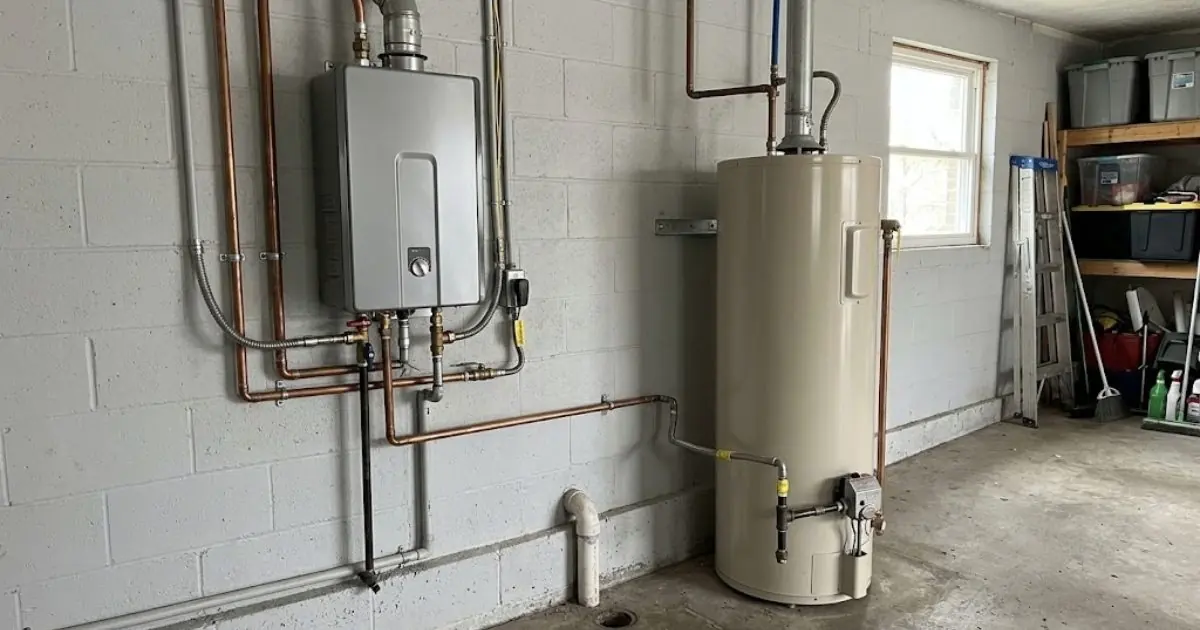
A tankless water heater warms water as it flows, so it has no storage tank to fail and it can supply hot water for as long as the flow lasts. In Griffin homes, tankless service means three things: installing a unit, repairing one that throws error codes, and flushing or descaling a unit that has started to underperform.
If you are in the middle of a failure, our emergency water heater repair page covers tank emergencies and urgent diagnosis. This page is the planned side of the work.
Installing Tankless: What Has to Change
Tankless heaters pull a lot of fuel in a short time. A gas unit often needs a larger gas supply line than a tank, and some homes need the meter or the line upgraded. Venting differs too, because tankless units use sealed or special venting that cannot reuse an old tank flue.
Electric tankless units draw a very large electrical load and may need a new panel circuit or service upgrade. We check the gas line, venting path and electrical capacity before we quote, so there are no surprises on installation day.
Gas Line Questions for Griffin Homes
Many people ask whether their existing gas line is large enough. The answer depends on pipe size, length of run and the other appliances on the line, and it is measured and calculated, not guessed.
If your home gets natural gas from Atlanta Gas Light, remember that any gas smell means leaving the building and calling 877.427.4321 or 911 from outside. We pressure test our gas connections and explain what we found.
Thinking about tankless?
Call for a clear price after we check your gas line, venting and flow needs.
Flushing and Descaling
Mineral scale builds up on the heat exchanger of any water heater, and tankless exchangers are small and sensitive to it. Symptoms include longer waits for hot water, a drop in temperature at high flow and error codes about flow or exhaust.
A flush circulates a descaling solution through the unit and flushes it clear. Many manufacturers recommend periodic flushing, and the interval depends on your water. Test your tap or ask the City of Griffin for its annual water quality report if you want to know what your water carries.
Repairs and Error Codes
Common faults include a clogged inlet filter, a failed flow sensor, an ignition problem and a venting restriction. Because tankless units are electronic, the first step is reading the code and checking the basics.
If your unit is no longer made or the manufacturer's parts are unavailable, we tell you before you spend anything. A repair that leads to a replacement is a conversation, not a surprise. For a unit swap, our water heater replacement page explains the process.
Radiant and Special Uses
Tankless heaters can feed a radiant floor loop, but the unit must be rated for that use and the system designed for it. Most Griffin homes do not have radiant floors, so this is a design conversation we have case by case rather than a standard install.
Gas, Venting and Manufacturer Standards
Tankless units are installed to the manufacturer's venting and gas sizing guidelines as well as the local code. Georgia's state minimum plumbing standard is built on the International Plumbing Code (IPC), with Georgia amendments published by the Georgia Department of Community Affairs, and local governments can add their own rules.
For a gas smell, leave the building and call Atlanta Gas Light at 877.427.4321 or 911 from outside.
What a Tankless Job Costs
Scope first, price second
The unit is only part of the price. Gas, venting and electrical changes are often the larger variable.
Insurance does not usually cover planned upgrades or wear on the unit. Ask the manufacturer about warranty terms and keep your service records.
Questions homeowners ask
They heat as long as the unit can keep up with the flow, so two showers and a dishwasher together can exceed a small unit's capacity. Sizing matters.
Follow the manufacturer's schedule, and flush more often if you notice error codes or longer waits for hot water. We can advise once we see the unit.
We diagnose most common brands. Call with the make, model and error code, and we tell you whether we can handle it.
Often yes, but older homes may need gas, venting or electrical changes. We check the home before we quote.