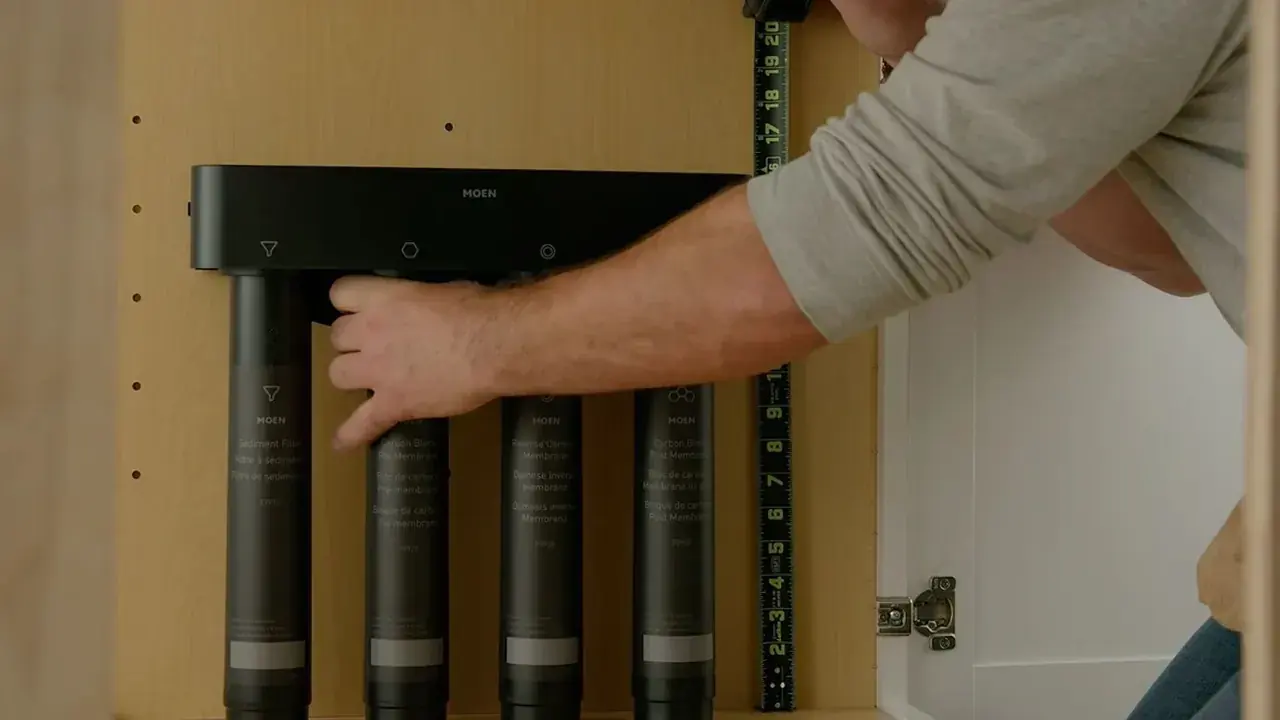
A carbon block filter is a solid block of compressed activated carbon that water is pushed through. It is one of the most common filters in home systems, from under-sink units to whole-house housings. It does some jobs very well and others not at all, and knowing which is which keeps you from buying the wrong thing.
This guide explains what carbon block does, where it sits in a plumbing system and how to start with a water report instead of a sales pitch. For installation of housings and lines, see our plumbing installation page.
How a Carbon Block Filter Works
Activated carbon is full of tiny pores with a huge surface area. As water passes through, some dissolved compounds stick to the carbon surface. Compressing the carbon into a block makes the pores finer and forces water through slowly, so contact time is longer than in loose granules.
Filters are rated by micron size and by certifications for specific contaminants. The label and the certification, not the marketing, tell you what a filter is tested to reduce.
What Carbon Block Is Good At
Carbon block is widely used to improve taste and odor and to reduce chlorine and certain organic compounds. Some certified blocks are also tested for lead, cysts or other targets, so read the certification sheet for the exact model.
| Target | Carbon block | Notes. |
|---|---|---|
| Chlorine taste and odor | Typically effective | Standard use. |
| Certain organic compounds | Often effective if certified | Check the model's test sheet. |
| Sediment | Partly | A sediment prefilter protects the block. |
| Dissolved minerals and hardness | No | Needs softening or other treatment. |
| Dissolved salts | No | Needs reverse osmosis or similar. |
Plumbing problem right now?
Call the 24/7 line and a licensed plumber is scheduled for the first available slot.
What It Does Not Do
Carbon block does not soften water, and it does not remove dissolved minerals such as the calcium and magnesium that cause scale. If scale on fixtures or your water heater is your problem, a filter alone will not fix it. Our water heater repair page explains how scale hurts a tank.
It also does not make questionable water safe. If you rely on well water or have a boil notice, a carbon filter is not a disinfectant.
Where It Goes in the House
Under-sink units treat one tap. A whole-house housing goes on the main line after the meter and shutoff and treats every fixture. A sediment prefilter usually comes first so the carbon block does not clog. Filters need a shutoff on each side and a bypass for service.
- Shutoff valve before and after the housing.
- Pressure gauge to know when the filter is loaded.
- Space to unscrew the housing and lift the cartridge.
- A drain or bucket spot for service.
- A plan for replacing cartridges on schedule.
Maintenance and Cartridge Life
Cartridges lose effectiveness over time, and an old cartridge can pass more than it holds back. Replace on the manufacturer's schedule or when flow drops. Keep a note of the install date on the housing.
Reading a Filter's Certification Label
The most trustworthy information on a filter is the independent certification, not the box art. Certifications from recognized testing organizations list the specific contaminants the model has been tested to reduce and the conditions of the test. A filter might be certified for chlorine taste and odor but not for lead, or the reverse.
Look for the performance data sheet and match it to your water report. If a salesperson says a filter removes everything, ask to see the sheet. No single filter handles every contaminant.
Micron Ratings in Plain Language
A micron rating tells you the size of particle the filter stops. A smaller number is a finer filter, and a finer filter clogs faster and restricts flow more. Carbon blocks are often rated at a few microns or less, which is why a sediment prefilter protects them.
If your water has a lot of sediment, a coarse prefilter takes the load. If your water is already clear, you may not need one. Your water report and your own observation guide the choice.
When to Replace Rather Than Add Filters
If your supply pipes are corroded and shedding rust, a filter treats the symptom while the pipe keeps failing. Persistent brown water points to the pipe, not the water source. In that case, see our repiping page, because filters clog quickly in a corroded system.
Likewise, if the problem is hot water only, the issue is probably inside the heater. See our service areas page to learn where we work.
Filter Certification Standards
Independent certification to published standards is how a filter's claims are verified, so look for the standard named on the performance sheet. Georgia's state minimum plumbing standard is built on the International Plumbing Code (IPC), with Georgia amendments published by the Georgia Department of Community Affairs, and local governments can add their own rules.
Ask the City of Griffin for its annual water quality report.
Start With Your Water Report
Do not guess what your water needs. The City of Griffin and other providers publish an annual water quality report, so ask your provider for the latest one and read what is measured. We do not state a Griffin hardness or contaminant figure here because we have not verified one for your address. A hardness test kit from a hardware store tells you scale potential in minutes.
Experiment homes may be served by a different provider or a private well, so ask which applies. Our Experiment page explains the area we serve.
Griffin questions answered
No. Hardness comes from dissolved minerals, and carbon does not remove them.
Follow the manufacturer's schedule, usually based on gallons or months, and replace sooner if flow drops.
Often yes. A sediment prefilter keeps particles from clogging the carbon block.
Ask the City of Griffin or your water provider for the annual water quality report for your address.