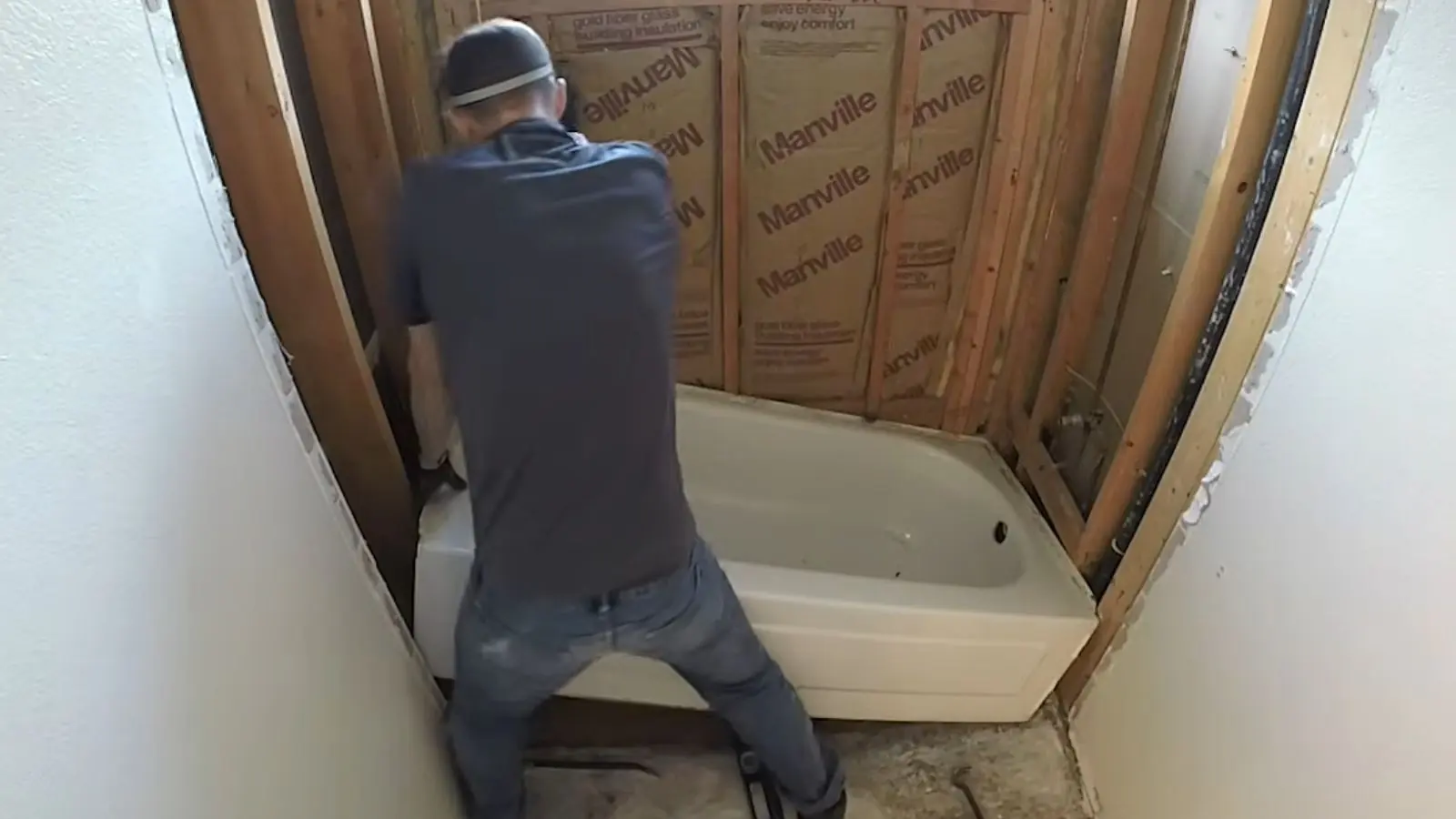
Setting a bathtub looks simple until you open the wall. The tub needs a watertight drain and overflow, a valve that mixes hot and cold, a vent that lets the drain run, and a floor that can carry the weight of a full tub. Most problems we see come from decisions made before the tub is set.
This guide walks through the plumbing parts of a tub installation so you can plan with your contractor. For the broader scope of remodeling work, see our plumbing installation page.
The Parts That Make a Tub Work
A tub has three plumbing systems. The supply side brings hot and cold water to a valve and a spout. The drain side carries water away through the overflow and the main drain into a trap. The vent side lets air into the system so the water drains quietly.
| Part | What it does | Common installation mistake. |
|---|---|---|
| Valve and trim | Mixes hot and cold water | Wrong depth for the finished wall. |
| Drain and overflow | Carries water to the trap | Leaky gasket or cross-threaded fitting. |
| Trap | Blocks sewer gas | Poor slope or an unvented run. |
| Vent | Lets air into the line | Missing or undersized vent. |
Replacing a Tub Versus Adding One
A like-for-like replacement keeps the drain and valve in place, and the job is mostly removal, rough-in checks and a leak test. Adding a tub or moving one to a new wall means new supply lines, a new drain with proper slope and a new vent, and that is a larger project with inspections.
Check the floor too. A cast iron or stone tub weighs far more than acrylic and may need reinforcement. Ask your contractor how the floor joists carry the load.
Plumbing problem right now?
Call the 24/7 line and a licensed plumber is scheduled for the first available slot.
Drain and Overflow Details
The drain assembly is the most common leak point in a new tub. A tub drain needs a good seal at the shoe, the overflow and the trap connection. Tighten fittings by the manufacturer's instruction and test by filling the tub to the overflow and watching for drips.
Do the test before the wall closes and again after. A slow drip into a ceiling below shows up months later as a stain, which then needs leak detection to trace.
Valve Depth and Water Pressure
A tub valve must sit at the correct depth for the trim kit and the finished wall thickness. Too deep or too shallow, and the trim does not seat. Pressure balancing or thermostatic valves protect against scalding when someone flushes a toilet or runs a tap. Ask which type your fixture uses.
If you are swapping a heater at the same time, see water heater installation for sizing a unit that can fill a large soaking tub.
Venting, Access and Inspection
Plan an access panel for the tub trap and valve so repairs do not need a sledgehammer later. Rough-in inspections happen before drywall. Do not close the wall until the plumbing passes, or the inspector may ask you to open it again.
Choosing the Right Tub Material for Your Floor
Acrylic and fiberglass tubs are light and warm to the touch, which makes them easy on the floor structure. Enameled steel is mid-weight and durable. Cast iron is heavy and holds heat, but a filled cast iron tub can weigh several hundred pounds and may need joist reinforcement. Stone resin and freestanding tubs vary widely.
Weight matters most on upper floors and over crawlspaces. Tell the plumber and the contractor which tub you are considering, and ask them to check the floor. A tub that is set on weak framing can crack, settle or stress its drain connection.
Drain Slope, Trap Arm and Vent Distance
Drain lines need a steady downward slope so water carries solids with it. Too flat and the line holds water. Too steep and water outruns the solids. The trap arm, the section between the trap and the vent, also has a maximum length for a given pipe size under common codes.
These rules are why moving a tub to a new wall is not a quick change. The new location has to meet the slope and vent requirements, and the inspector will check. Ask for the rough-in plan before you buy cabinets or tile.
Water Heater Capacity for a Large Tub
A large soaking tub can hold eighty gallons or more. A forty gallon water heater cannot fill it with hot water. If you are adding a big tub, ask the plumber whether the heater has the capacity and recovery rate for the use. Sometimes the answer is a larger heater, and sometimes it is accepting a slightly cooler bath.
Our water heater installation page covers sizing, and our service areas page shows where we work.
Code Points for Tub Rough-In
Tub drain slope, trap arm length and vent distance are code items. Georgia's state minimum plumbing standard is built on the International Plumbing Code (IPC), with Georgia amendments published by the Georgia Department of Community Affairs, and local governments can add their own rules.
For a permit question at a Griffin address, call the City of Griffin Permits Division at (770) 233-4130, and for unincorporated Spalding County call Community Development at (770) 467-4280.
Permits for Bathroom Work in Griffin and Spalding County
The City of Griffin says trade permits for plumbing work must be obtained by licensed contractors, and the Permits Division at 100 S. Hill St. can explain what a bathroom project needs at (770) 233-4130. Unincorporated areas, including Experiment, work with Spalding County Community Development at (770) 467-4280.
To confirm that a contractor holds a Georgia license before you sign, use the Georgia Secretary of State's verification site at verify.sos.ga.gov.
North of the city, our Experiment plumber page explains how we serve that community.
Griffin questions answered
Yes, but it needs new drain and vent routes and often a permit. We check the floor structure first.
It depends on the work. Call the City of Griffin or Spalding County office for your address.
Poor slope, a partially blocked trap or a missing vent. We check all three.
Search the license holder at verify.sos.ga.gov, the Georgia Secretary of State's verification site.