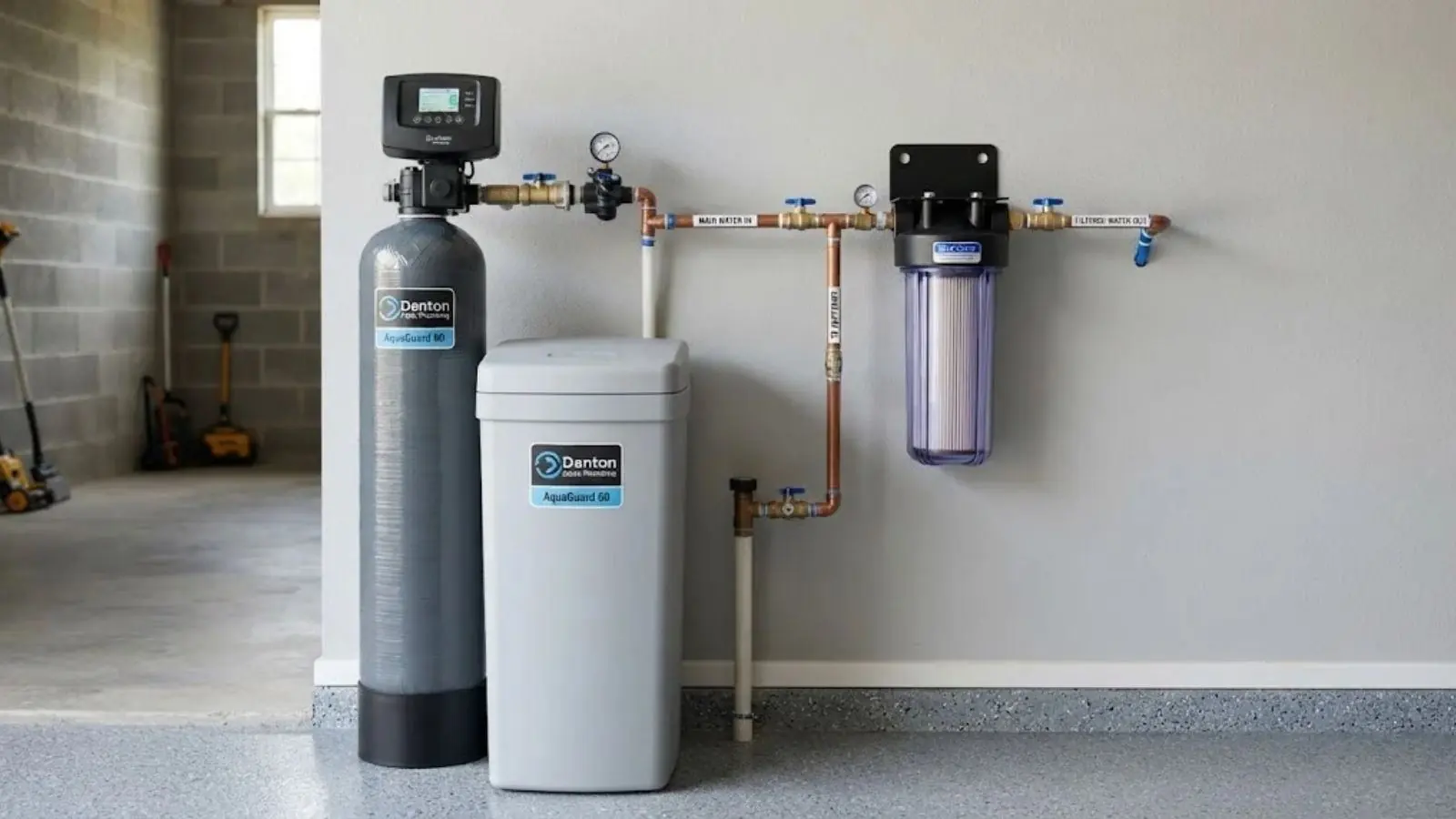
A softener and a filter are often confused, but they solve different problems. A softener removes the minerals that cause hardness. A filter removes particles, chlorine and certain chemicals. Many homes need one, some need both and some need neither. The right choice starts with knowing what is in your water.
This guide compares the two in plain terms. If you want help planning the plumbing for either, our plumbing installation page explains the work.
What a Softener Does
A water softener uses ion exchange. Resin beads hold sodium ions and swap them for calcium and magnesium as water passes through. The hardness minerals stay on the resin, and the resin is recharged periodically with brine and flushed to a drain.
Softened water leaves less scale on fixtures, in water heaters and in appliances. It also makes soap lather easier.
What a Filter Does
A filter physically or chemically removes things from water. Sediment filters catch sand and rust. Carbon filters reduce chlorine and certain organic compounds. Specialty filters target other substances. A filter does not remove the dissolved minerals that cause hardness.
| Question | Softener | Filter. |
|---|---|---|
| Reduces scale on fixtures | Yes | No. |
| Improves chlorine taste | No | Yes, with carbon. |
| Removes sediment | Not designed to | Yes. |
| Needs drain and salt | Yes | No. |
| Needs cartridge changes | Occasionally | Yes. |
Plumbing problem right now?
Call the 24/7 line and a licensed plumber is scheduled for the first available slot.
Which Problem Do You Have
Match the symptom to the tool.
- White crust on faucets and showerheads points to hardness.
- Short water heater life and scale in the tank points to hardness.
- Chlorine taste or smell points to a carbon filter.
- Brown or gritty water points to a sediment filter and a look at the pipe.
- Rotten-egg smell may be a water heater issue, not a treatment issue.
If your hot water smells or your heater runs poorly, our water heater repair page explains the checks before you spend on treatment.
Using Both Together
Many whole-house setups put a sediment filter first, a softener second and a carbon filter last or at the kitchen tap. That order protects the softener from sediment and polishes taste at the end. Plumbing space, drain access and an electrical outlet decide whether it fits your house.
Ask for each component as a separate line so you can add them in stages.
Installation Needs
A softener needs a drain for regeneration water, an outlet, a bypass valve and room for a brine tank. A filter needs shutoffs, a bypass and room to change cartridges. Both should be installed after the main shutoff and before the water heater branch, so a plumber checks the layout and the pipe size first.
A Quick Decision Path
Work through three questions in order. First, do you see scale on fixtures or inside your water heater, or do you have a hardness reading above what you want? If yes, a softener is worth pricing. Second, do you taste or smell chlorine, or see sediment? If yes, a filter is the tool. Third, does your water report list a specific contaminant you want reduced? If yes, look for a filter certified for that contaminant.
Many households answer yes to the first two and install a sediment filter, a softener and a carbon filter in that order. Others answer yes to only one and save money. If the answer to all three is no, spend nothing and keep the water report on file. See our service areas to confirm we reach your address.
How to Test Hardness at Home
A hardness test strip or a drop-count kit costs little and gives a reading in minutes. Collect water from a kitchen tap that has not been treated, follow the instructions and write down the result. Repeat at a second tap and at an outdoor spigot to see whether the result is consistent.
Compare the result with your provider's water quality report. If the two agree, you have a good number to work from. If they differ, ask the provider why, since pipe, heater and softener effects can change what reaches your tap.
Salt, Water Use and Maintenance
A softener uses salt or a salt substitute to recharge the resin, and it sends a small amount of brine to the drain at each regeneration. Check the salt level every month or two. Resin lasts for years but eventually wears, and the control valve needs occasional service.
Filters need cartridge changes instead of salt. Neither is maintenance-free. Ask any seller for a yearly maintenance estimate and plan for it. Our plumbing installation team can place a bypass so service is easy.
Effects on Your Plumbing and Appliances
Hard water leaves scale on heating elements, inside water heater tanks and in dishwashers. Softened water slows that buildup. That is one reason homeowners with electric heaters ask about softening, since scale shortens element life. Our water heater repair page explains the link.
Softened water feels slick on skin, and some people dislike that. It is a matter of preference, and some homes soften only the hot water side or bypass the kitchen tap. See our Experiment page for homes north of the city.
Standards for Treatment Equipment
Softeners and filters are tested to published performance standards by independent labs, and the data sheet names the standard. Georgia's state minimum plumbing standard is built on the International Plumbing Code (IPC), with Georgia amendments published by the Georgia Department of Community Affairs, and local governments can add their own rules.
Test Before You Buy in Griffin
The City of Griffin and other providers publish annual water quality reports, so ask yours for the latest. We do not quote a hardness number for the city because we have not verified one from a published source for your address. A hardware store test kit or a lab test gives a real hardness value. Without that number, a softener is a guess.
For permit questions on plumbing changes, call the City of Griffin Permits Division at (770) 233-4130, or Spalding County Community Development at (770) 467-4280 for unincorporated areas such as Experiment.
Griffin questions answered
No. A softener removes hardness minerals. A filter removes particles or chemicals.
It depends on your water. Test hardness or ask your provider for its water quality report.
No. A softener needs a drain for regeneration water.
No. Low pressure comes from other causes. We test pressure first.