Many homeowners assume a water heater swap is too small to need a permit. In some places it is, and in others it is not. The honest answer depends on where your house sits and what the work involves. This guide points you to the offices that decide and explains what inspectors usually look at.
If your tank has already failed, our water heater replacement page covers the urgent side. This page is for the planning questions.
Why Permits Exist
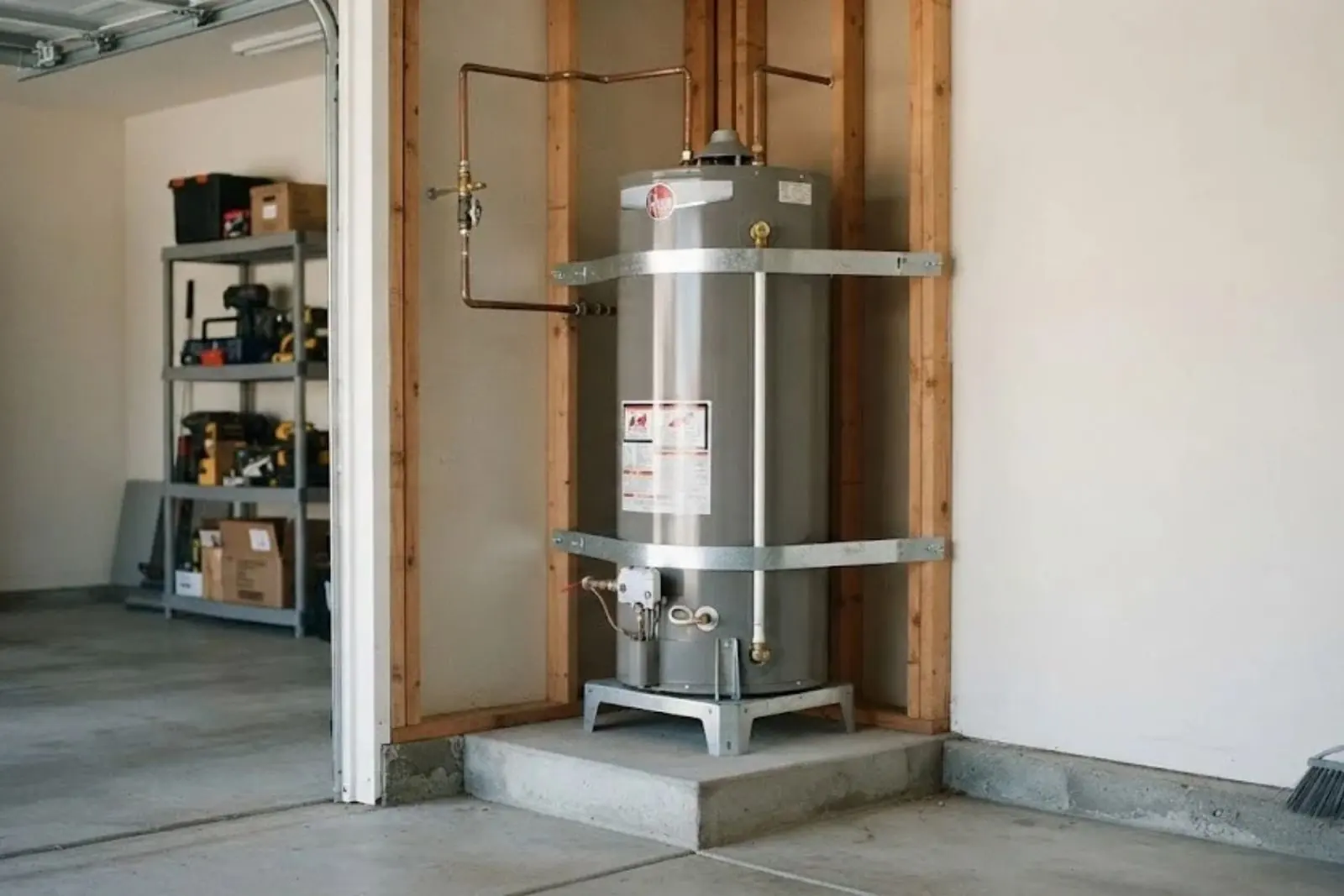
A water heater is a pressurized vessel connected to gas or high-voltage electric power. Done wrong, it can leak gas, scald someone or overheat. A permit lets a local inspector confirm that venting, relief valves, shutoffs and electrical connections meet the code your jurisdiction has adopted.
The permit also creates a record. Home buyers and insurers sometimes ask for proof that major equipment was installed to code.
What the City of Griffin Says
The City of Griffin states that trade permits for plumbing, electrical and HVAC work must be obtained by licensed contractors. The Permits Division is at 100 S. Hill St., and the office phone is (770) 233-4130. Whether a like-for-like tank swap needs a permit is a question to put to that office for your address and the work you are doing.
Do not rely on a neighbor's experience or a general rule. Rules differ by jurisdiction and change, and the office gives you the current answer.
Plumbing problem right now?
Call the 24/7 line and a licensed plumber is scheduled for the first available slot.
Unincorporated Spalding County and Experiment
Homes outside the city limits, including the Experiment community, fall under Spalding County. Spalding County Community Development handles permits there and can be reached at (770) 467-4280. Call with the street address, and they tell you which office has authority and what is required.
If you are not sure whether you are inside the city, say so on the call. A staff member can look up the address.
What an Inspector Looks At
Inspection items vary, but these are the usual ones for a water heater.
| Item | What the inspector checks | Why it matters. |
|---|---|---|
| Relief valve and discharge pipe | Correct rating and a safe drain path | Prevents tank rupture and scalding. |
| Venting | Proper slope, clearances and connections | Moves combustion gases outside. |
| Gas connection | Shutoff, flex connector and leak test | Prevents gas leaks. |
| Electrical | Correct breaker and wiring | Prevents overheating. |
| Expansion tank | Present where the code calls for it | Absorbs pressure swings. |
Checking a Plumber's License
Before you sign, verify the license holder at verify.sos.ga.gov, the Georgia Secretary of State's license verification site. Ask who holds the license and whether the permit is in the contractor's name. A contractor who offers to skip a permit that the office says is required is a red flag.
Why Skipping a Permit Can Cost You Later
A missing permit rarely causes trouble on the day of the install. It causes trouble later. A buyer's inspector asks for the permit history. An insurer asks whether the equipment was installed to code after a loss. A city office finds unpermitted work and asks you to open walls or redo the job at your cost.
None of that is certain, and it depends on your situation. The safest path is to ask the office that has authority over your address and follow its answer. If a permit is required, the contractor should explain who pulls it and how the inspection is scheduled.
Questions to Ask a Contractor
A good contractor answers these without hesitation.
- Do you hold a current Georgia license, and can I verify it?
- Will you pull the permit, and is it in your name?
- Who schedules the inspection and when?
- What happens if the inspector requires a change?
- Will I receive a copy of the permit and the final inspection record?
If you ever get vague answers, slow down. Our water heater installation team confirms these points for your address before work starts.
Gas and Electric Details Inspectors Care About
Gas heaters bring combustion air, venting and a gas shutoff into the picture. Electric heaters bring the breaker size, wire gauge and disconnect. Both bring a relief valve and a drain path. Inspectors look at all of these, and a heater that works can still fail inspection if a detail is wrong.
That is why a swap that seems simple is not always a ten minute check. If you are comparing quotes, ask each contractor how they handle venting, relief valve piping and the permit, and see our Experiment page if your home is north of the city limits.
Where These Permit Rules Come From
The statements above come from the City of Griffin's own description of its Permits Division and from the county's Community Development office. Georgia's state minimum plumbing standard is built on the International Plumbing Code (IPC), with Georgia amendments published by the Georgia Department of Community Affairs, and local governments can add their own rules.
Ask the office for the current rule, because standards change.
Who to Call and What to Say
Keep it simple on the phone. Give the property address, say you are replacing a water heater, name the fuel type and ask three questions: is a permit required, who pulls it and what inspection follows. Write down the answers, the date and the staff member's name. If you hire us, we confirm the same details for your address and tell you what applies.
Our service areas page lists where we work, and our water heater installation page covers planned installs.
Griffin questions answered
It depends on the jurisdiction and the work. Call the City of Griffin Permits Division at (770) 233-4130 or Spalding County Community Development at (770) 467-4280.
The city states that trade permits for plumbing must be pulled by licensed contractors. Ask the office about your situation.
The city and county offices can look it up by address.
Ask the permit office what options exist. Records can matter when you sell or file an insurance claim.
Use verify.sos.ga.gov, the Georgia Secretary of State's license verification site.