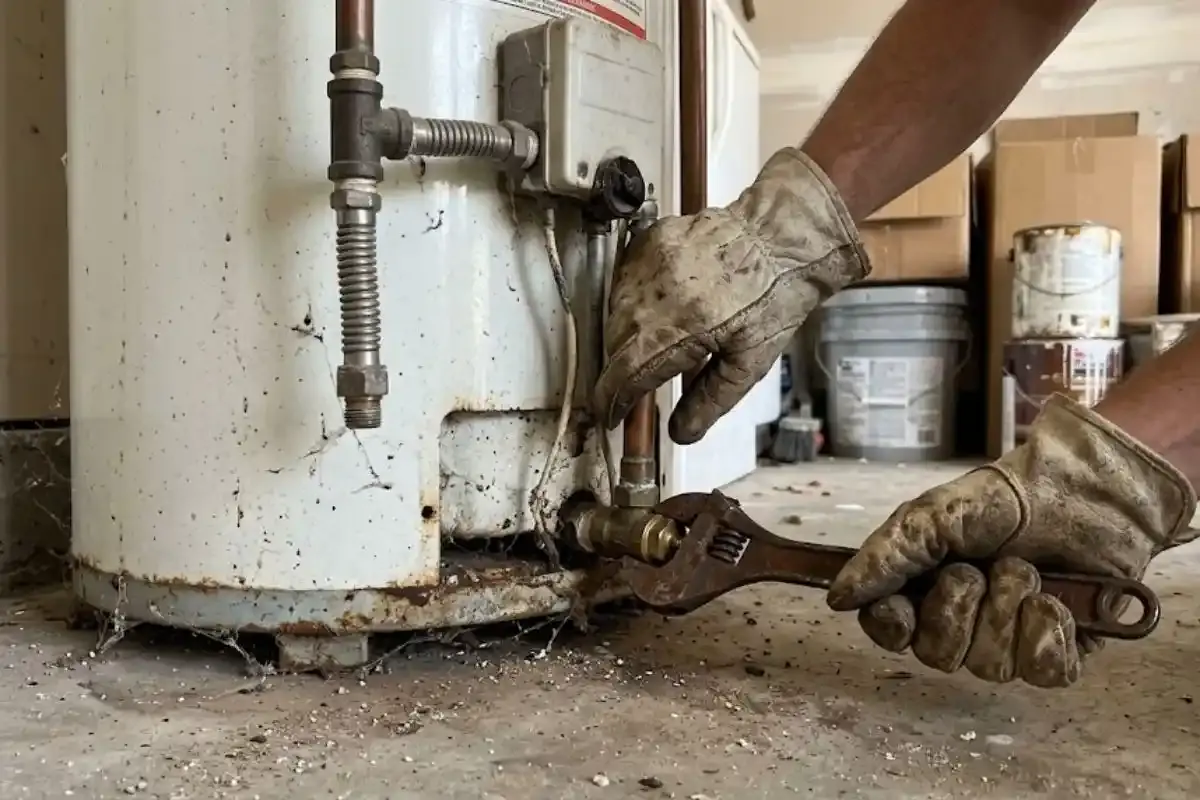
Inside a steel water heater tank hangs a long metal rod that exists to be eaten. The anode rod corrodes in place of the tank, and when it is gone, the tank starts to rust instead. Replacing a spent rod on a younger tank is one of the cheapest ways to add years to a heater.
This guide explains how the rod works, how to tell when it is spent and when replacement no longer makes sense. If your tank already leaks, go to water heater replacement, because a rod cannot repair a failed liner.
How the Rod Protects the Tank
Water attacks steel. A glass lining coats the inside of the tank, but tiny gaps in the glass expose bare steel. The anode rod is made of a more reactive metal, usually magnesium or aluminum, and it gives up electrons so the steel does not. The rod dissolves slowly instead of the tank.
Once the rod is mostly gone, the corrosion moves to the tank wall. That is when pinhole leaks and rusty water begin.
Signs the Rod Is Spent
You can check it by inspection, and some signs show up in the water.
- Hot water smells like rotten eggs, which can come from bacteria reacting with the rod.
- Rust-colored hot water, while cold water runs clear.
- Popping or rumbling sounds from sediment.
- A rod that is thin as a wire or coated in white or gray scale when pulled.
- A tank that is past six or eight years with the rod never checked.
A plumber pulls the rod and looks at it. If more than a few inches of bare steel core show, it is spent.
Plumbing problem right now?
Call the 24/7 line and a licensed plumber is scheduled for the first available slot.
Magnesium, Aluminum and Powered Rods
Magnesium rods protect best but corrode fast in some water. Aluminum rods last longer in some water but can release small particles. Powered anode rods use a small electrical current and do not dissolve, so they last longer and can reduce odor. The best choice depends on your water and your tank.
| Rod type | Strength | Trade-off. |
|---|---|---|
| Magnesium | Strong protection | Can be consumed quickly in some water. |
| Aluminum | Often lasts longer | Can shed particles in the tank. |
| Powered | Does not dissolve | Higher cost and needs a power connection. |
Ask your plumber which fits your tank's warranty, since some manufacturers specify the rod type.
When a New Rod Is Worth It
Replacing the rod pays off on a tank that is under about eight years old with no rust and no leaks. It rarely helps a tank that is already corroded, because the damage is done. If the tank is old and the rod is gone, the money goes to a new heater.
Replace the rod
- Tank is dry and under about eight years old.
- Rod is thin or gone.
- No rust at the seams.
- Often a quick, low-cost repair.
Replace the heater
- Tank leaks or weeps.
- Tank is past about ten years.
- Rust-colored hot water persists.
- See water heater repair for the diagnosis.
Getting the Old Rod Out
The rod screws into the top of the tank, and it can be very hard to turn after years. Plumbers use an impact wrench and sometimes a flexible rod when the ceiling is low. If you try it yourself, shut off the power or gas and the water, and drain a few gallons before you loosen the rod.
What the Process Looks Like
Replacing a rod is a short job on a healthy tank, and it follows a clear order. The plumber shuts off power or gas and the cold inlet, drains a few gallons to relieve pressure, loosens the old rod with an impact wrench, pulls it, installs the new rod with fresh thread tape and refills the tank. Power is restored only after the tank is full.
If the rod will not budge, the plumber may use a flexible rod design in tight spaces. Garages and closets with low ceilings often need one. A stuck rod is a common reason this job is better left to a professional.
Reading a Pulled Rod
The condition of the old rod tells you about the tank. A rod that is nearly intact after years may mean your water is gentle or the rod type is slow-wearing. A rod that is gone in a few years suggests aggressive water or a very reactive metal. A rod coated in heavy scale tells you the tank is accumulating minerals fast.
We show you the rod we pulled and explain what it says. If the tank is in good shape, the new rod buys years. If the tank is already pitted, we tell you honestly, and our service areas page shows the towns we serve.
Flushing and Checking the Tank at the Same Time
Draining the tank for a rod swap is a good time to flush sediment from the bottom. That helps the burner or lower element and cuts noise. It is also a chance to test the relief valve and look at the fittings for corrosion. Combining these steps is efficient and gives a clear picture of the heater's health.
Warranty Guidelines and Rod Standards
Tank makers publish guidelines on rod type and replacement, and some warranties depend on following them. The manufacturer's installation instructions printed with the equipment are part of the standard an inspector reads against.
Water Chemistry Around Griffin
How fast a rod wears depends on your water. We do not quote a hardness figure for Griffin because we have not seen one in a published source for your address. Ask the City of Griffin or your water provider for its annual water quality report, or test your tap with a hardness kit. Rod wear and scale buildup both track with the minerals in the water, and the report gives you real numbers to work from.
Homes in Experiment may be on a different provider, so ask which one serves your address. Our Experiment emergency plumbing page lists how we serve that area.
Griffin questions answered
Many manufacturers suggest checking every few years. A plumber can pull it during a flush.
Bacteria in the tank can react with the rod. A different rod type or a tank flush often helps.
No. A leak means the liner has failed, and the tank needs replacing.
It can, so check the manufacturer's instructions before swapping the type.