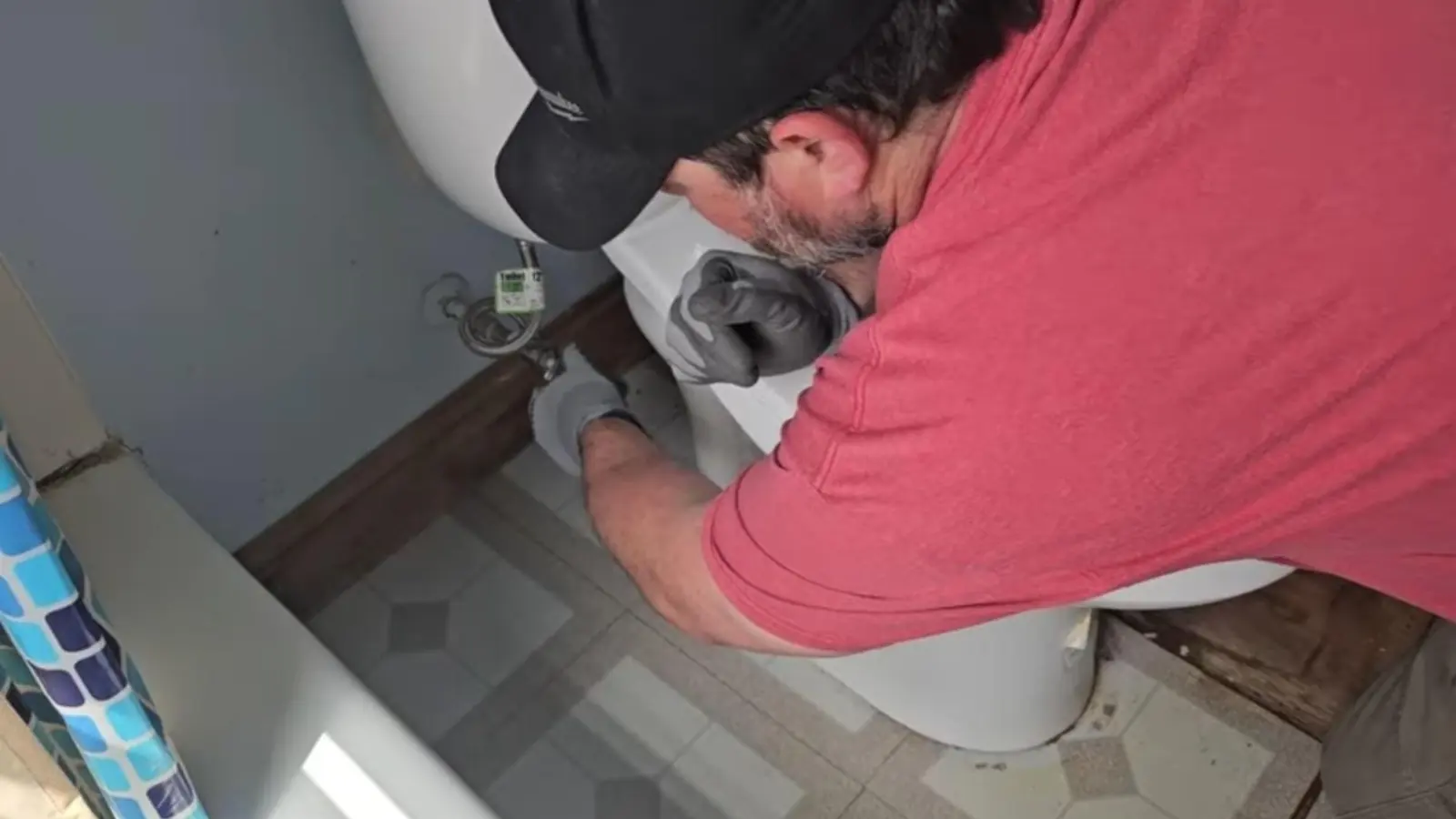
The toilet flange is the ring on the floor that the toilet bolts to and that connects the bowl to the drain. In many older homes it is metal, usually cast iron, brass or steel. Metal flanges rust, crack and separate from the pipe, and the first sign is a toilet that rocks or leaks at the base.
This guide explains what a failed flange looks like and which repairs fit which damage. If the toilet itself is the problem, see toilet repair and installation.
Why Metal Flanges Fail
A metal flange sits in a wet, corrosive spot. Moisture, cleaning chemicals and years of small leaks attack the metal. Cast iron rusts and flakes. Brass pits. A flange that was never fastened well to the floor can also loosen as the subfloor moves.
Once the flange is weak, the toilet no longer sits firmly. Rocking breaks the wax seal, and the seal lets water onto the floor.
Signs of a Bad Flange
These signs show up at the base of the toilet.
- The toilet rocks or shifts when you sit.
- Water or damp spots appear around the base after flushing.
- A sewer smell rises from the floor.
- Closet bolts are rusted, loose or will not hold.
- The floor around the toilet is soft or stained.
A soft floor means the leak has been going on for a while, and the subfloor needs inspecting before any new flange is set.
Plumbing problem right now?
Call the 24/7 line and a licensed plumber is scheduled for the first available slot.
Repair Options
The right repair depends on how much of the flange is damaged and what is under it.
| Damage | Repair | Notes. |
|---|---|---|
| Bolt slots rusted or broken | Repair ring or bolt kit | Works only if the flange is otherwise sound. |
| Flange cracked in one spot | Metal or plastic repair ring screwed to the floor | Needs solid subfloor. |
| Flange corroded through | Cut out and replace with a new flange | May need pipe work below. |
| Flange sits below the floor | Spacer or extension ring | Restores a good seal height. |
| Subfloor rot | Subfloor repair first | Then reset the flange. |
Cast Iron Drains and Older Pipe
A metal flange often connects to cast iron pipe, which may be corroded inside as well. Replacing the flange can reveal pipe that crumbles when cut. That turns a flange job into a pipe repair. We look at the pipe below before we promise a quick fix, and our drain cleaning page explains what a camera can show about the line.
Setting the Toilet Back Correctly
A new wax ring or foam seal goes on the flange. The toilet is set straight, bolts are tightened evenly and the supply line is reconnected. Test several flushes and look for drips. A caulk bead at the base is optional and some plumbers leave a gap to reveal leaks.
Checking the Flange Before You Buy Parts
Pull the toilet and look before you buy anything. Measure the flange height against the finished floor. Check whether the ring is cracked, whether the bolt slots are intact and whether the flange is firmly anchored. Poke the floor around it with a screwdriver to test for soft wood.
A flange that sits a little below the finished floor is common after a tile upgrade. A spacer ring or a thicker seal can bridge a small gap, but a large gap needs the flange raised. A plumber measures it and picks the right fix.
Why a Repair Ring Is Not Always Enough
A repair ring screws onto the old flange and gives the toilet bolts a new place to hold. It works when the flange is solidly attached to a sound pipe. If the pipe below is cracked or the floor is rotten, the ring has nothing solid to grip, and the toilet will loosen again.
That is when the repair becomes a pipe job or a subfloor job. We tell you what we find before we choose, and our toilet repair and installation page explains how we handle the reset.
Cast Iron Stack Connections
In older homes, a cast iron flange may be caulked or leaded into a cast iron pipe. Removing it can break the pipe or release years of buildup. Plumbers use specific tools to cut and replace such sections cleanly. If your toilet sits on a cast iron stack, do not pry at the flange, because the pipe below may crack.
For homes outside the city, such as those in Experiment, the layout may be different again. See our service areas for where we work.
Standards for Flange Height and Seal
Flange height, bolt position and seal type follow the toilet maker's guidelines and plumbing code. Georgia's state minimum plumbing standard is built on the International Plumbing Code (IPC), with Georgia amendments published by the Georgia Department of Community Affairs, and local governments can add their own rules.
The manufacturer's installation instructions printed with the equipment are part of the standard an inspector reads against.
Older Griffin Homes and Metal Flanges
Griffin has housing from many eras, including mill-era cottages and mid-century homes built when cast iron drains and metal flanges were common. Tell the plumber the age of the home so they come prepared for corroded pipe. For permit questions on drain or flange replacement, the City of Griffin Permits Division is at (770) 233-4130, and Spalding County Community Development is at (770) 467-4280 for unincorporated areas.
Experiment homes can be on septic. See our Experiment page for how that changes the call.
Griffin questions answered
If the ring is cracked or has a broken bolt slot, a repair ring can work. If it is corroded through, it is replaced.
The flange may be loose, cracked or sitting too low. Overtightening can crack the bowl.
Stop using the toilet and call. The subfloor needs repair before the flange is reset.
Yes. Replace the seal whenever the toilet is lifted.